Wednesday, April 27, 2011

My FFRF "Billboard"

You remember those Freedom From Religion Foundation Billboards? Well, I finally went and submitted my own custom one, complete with some quote I heard somebody say once on a message board somewhere (it sounds just witty enough that I'm certain it can be attributed to somebody important, but I can't find a source for it...):


Cool, yah?

Monday, April 11, 2011

Take A Moment, If You Will

Religion is a difficult thing to discuss. It's really, really easy to hurt people's feelings or make sweeping generalizations without ever even realizing. I've done it myself and I've had it done to me. It's not fun and it certainly doesn't put you in a listening frame of mind.

Don't get me wrong --- there are a lot of category judgments involved in this sort of debate. Part of my big argument against religious belief in general is that it prides itself on being antithetical (or at least completely independent of) observable reality. But these are statements about reasons, arguments, etc., and maybe even about groups of people, but not about individual people. I always try to ask myself before I write or say something, "can I imagine some theoretical individual person to whom this generalization does not apply?" And if the answer is "yes," I'm always sure to qualify it as such. In my counter-apologetic endeavors, I am attacking ideas and actions, not people.

So I guess the point of this little posting is to ask everybody who's involved with this debate --- no matter which "side" you're on --- to take a moment to let the other party know that you don't hate them or look down on them as people, even if you think their ideas are stupid and ridiculous and unfounded. It's very, very easy to get caught up in heated arguments to the point that you feel like the other person must be just plain stupid to not see things the way that you do. You may think they're being dishonest, or disingenuous. And maybe they are. But unless that becomes clear through the course of their actions such that it is demonstrable, there's really no need to make unprovable assumptions and unverifiable accusations. If the person's arguments are flawed, then no amount of name-calling or well-poisoning is going to make that any more or less true.

In most fighting sports, there is a tradition of honor wherein the participants show their mutual respect before and after the match. In every sport there is a tradition of sportsmanship wherein all teams show their intent to compete honestly and respectfully. I don't see why debate has to be any different, just because it's about something important like religion --- the way I view it, each of my opponents may be "fighting" for a different "team" than I am, but that does not change the fact that we are people who still have to share the world at the end of the day. I feel like, isn't it enough that we have these fundamental disagreements? Do we really have to make it worse by dragging personal attacks and general disrespect into the equation?

I mean, seriously. Some of this subject matter is difficult and depressing enough as is; we don't have to walk away from it feeling like we've wasted our time just by acknowledging that it needs to be discussed.

So here's my little thing I want to say: Although I think the world would be much, much better off without religion, I feel this way for a reason --- which is to say that I feel there is a goal of basic human unity which is obscured by religion, among other things, and whose achievement is paramount. As in entropy, where a system can be universally unstable but locally stable, there are ways that this goal can be locally striven towards by cooperating with religious parties --- even if it seems that merely coexisting with divisive religious parties will interfere with the achievement of unity.

The point being: if we allow our individual differences to interfere with the achievement of the greater goal of human unity, then we have defeated the purpose of having this debate at all, even if we think we're doing something "good" by being so divisive. Does it make sense to sow chaos in order to create order?

There will be times where our differences are irreconcilable. But I just don't believe that it *always* has to be that way. We certainly don't have to make it that way. If we let people suffer when we could help them, or if we let people feel isolated and alone when they don't have to, just to achieve some short-term political or religious end, then we have wasted our time.

Friday, April 8, 2011

A Deconstruction of Moral Deconstructionism

"In a world without god, everything is meaningless!"

"There's no objective morality without god!"

How many times have you heard this apologetic? It seems like the only thing standing between the world as we know it today and the fall of Christianity. Sure, there are a lot of other bad apologetics, but this is one of --- if not THE --- *most* prevalent, most popular, most relied-upon arguments in all of Christian apologetics (matched only, perhaps, by Pascal's Wager, nothing if not a close second). If you press a Christian apologist long enough on any other subject, whether it's a professional with a fancy book career or just an annoying random drive-by evangelist, the argument *will* eventually return to this claim: "Without god, there is no consistently objective way to determine what is 'moral.'" And on that basis they will say that an atheist cannot have a true system of moral beliefs, ergo, religion is necessary.

I'm going to use as my source today a book by Mr. Sam Harris, called "The Moral Landscape," because I find it has a nearly perfect dissection of this idea. First off, we must define "morality" as understood by both parties.

The dictionary definition of "moral," according to my edition of Miriam-Webster, is as follows:

(adj.)
1.Relating to, dealing with, or capable of making the distinction between right and wrong in conduct;
2. relating to, serving to teach, or in accordance with, the principles of right and wrong;
3. good or right in conduct or character; sometimes specifically, virtuous in sexual conduct;
4. designating support, etc. that involves approval and sympathy without action;
5. being virtually such because of its effect on thoughts, attitudes, etc., or because of its general results (a "moral" victory);
6. based on strong probability (a "moral" certainty);
7. (law) based on general observation of people, on analogy, etc. rather than on what is demonstrable ("moral" evidence);

(n.)
1. a moral implication or moral lesson taught by a fable, event, etc.;
2. the conclusion of a fable or story containing a moral lesson;
3. (pl.) principles, standards, or habits with respect to right or wrong in conduct; ethics, sometimes specifically standards of sexual behavior.


Now as you may notice, citing this definition merely passes the buck, as it is obvious what I mean by "morality" so long as the general principles of "right and wrong" are understood. By which I mean that we are now forced to define "right" and "wrong." To spare you more dictionary quotations, I will quote something more interesting instead: Mr. Harris' argument from page 15 of the hardcover edition of The Moral Landscape:

"For my argument...to hold, I think one need only grant two points: (1) some people have better lives than others, and (2) these differences relate, in some lawful and not entirely arbitrary way, to states of the human brain and to states of the world."

Which can also be phrased as such: any definition of "good" or "bad" in terms of judging the quality of a person's life must necessarily correlate with some real quality about the world; this is the only way it can make effective prescriptions for human behavior. The Christian apologist feels this way, as well, even if he or she doesn't realize it --- the authoritative stance on morality asserted by the Bible and Christian theology in general still ultimately relies upon these same utilitarian arguments; the difference between theistic morality and secular morality is merely that we have differing ideas about what those facts about the world are; as Mr. Harris mentions several times throughout his book, whether or not we believe in the idea that there is a supernatural entity that can magnify or diminish our suffering after we die (and by a magnitude that makes our current worldly suffering seem ultimately inconsequential) will have some effect on whether or not we perceive it as a wise decision to ignore or worship this entity. My claim here today is that even if such a being *were* to exist, we would still rely upon the same principle arguments we currently use to establish secular, non-religious morality, to establish the practicality of following or opposing such a deity. Which is to say, in simpler terms, that god's existence (or nonexistence) is completely irrelevant to the actual, substantial nature of morality. Morality, seen in this light, is more of a science than a "revealed law" --- not a final objective law, but a model-based interpretation of reality, which can be studied and improved scientifically. To approximate the inside jacket of The Moral Landscape, this view puts morality on the scale of a scientific discipline such as physics or mathematics, and so as there can be no "Muslim mathematics" or "Christian physics," nor can there be such a thing as "Christian morality" or "Muslim" morality.

We'll save the details of that for another time; for now, this analogy will do. In proper scientific fields such as physics and mathematics, we don't deal in objective knowledge or "absolute truth." We deal in what is known as a model: a systematic view of the world based on observation, and confirmed by experimentation. The "laws" of mathematics, as we understand them, are not magic things which exist independently and "hold up math;" they are reflections of our observations of patterns in the behavior of things in the universe, expressed as models within our minds --- "pictures" that we "draw" in our minds of the universe as we see it. These "models" don't literally exist any more than the picture currently serving as your desktop background "exists" on your harddrive --- it does exist, but as data being interpreted by a system. There is not an actual picture lying somewhere on your hard drive that can be literally picked up and observed with your bare hands and eyes. Every observation you and I make, every thought we have, is ultimately expressed in the form of such a model --- a view of the world that we use to make judgments both big and small.

With that said; I'd like to return to the first two sentences of this post: "In a world without god, everything is meaningless! There's no objective morality without god!"

Is that really true?

I have no doubt that some people believe this is true. That in itself is not odd (wrong, maybe, but not odd). What is odd to me is that Christian apologists speak to secular-minded scientists as though we should feel the same way. They expect us to simply cave and throw out two thousand-plus years of moral evolution and development, because "our moral ideas don't exist as literal, ultimate, final truth about the universe." But think about that for a minute. What is the fundamental difference between morality *with* god, and morality *without* god?

Ultimately, our view (our "model") of morality is based on a combination of our observations and our innate, sometimes unconscious or instinctual, expectations of what the world should be like, regardless of what those specific expectations may be. If someone believes that it is moral to justify dying to defend some particular principle, then it is because that person believes that a world where that principle is regarded highly is a better world than a world where it is not, to the extent that they would rather give up their life than live in a world where this principle is not acknowledged --- they believe that a world without them, but with this principle intact, is ultimately better than a world with them, but without this principle. This is a secular concern, though; on the other hand, if someone believes that it is moral to justify dying for a particular deity, then it is because they believe that either they, or someone whose fate concerns them in some way, will be ultimately better off for it.

What is the common unifying factor in both of these examples?

They both take into consideration the concern of welfare for some party. In the case of dying for a secular ideal, it is concern for other people's well-being here on earth, with no concern for any possible life after death. In the case of dying for a deity, it is *still* done out of concern for one's well-being, just on a different scope --- taking into account the belief in a life after death, as well as the possibility of suffering in this life. The suffering of dying in this world is weighed against the suffering anticipated in the afterlife, and it is decided that suffering finitely for now is "better" than suffering infinitely later. This is decided based entirely on fundamental principles which can be applied in a secular world --- specifically, the idea that decisions can be made with concern for oneself or another's well-being, on some scope or another.

So if this reasoning can be used to justify moral decisions with respect to the afterlife, why can it not also be used to justify moral decisions with respect to a secular life, with no anticipated continuation of life after death? Pascal's Wager itself is based in the exact same fundamental principles used to determine secular morality --- that one can decide what to do based on the consequences of actions, and not based on some intrinsic quality of the action being prescribed. This is the utmost form of irony, I think.

With all this considered....what would you say if you were a physicist, trying to explain to someone the finer details of quantum probability amplitudes, and the person you were explaining it to just kept sticking his or her fingers in their ears and saying, "la la la, I can't hear you!" Would that make your "beliefs" about physics "arbitrary," because there's nothing you can say to make the other person see things the way you do? Does that mean there is no model of a physical understanding of the universe which can be confirmed via experiment? Or does it mean that you are dealing with someone who refuses to understand?

Now you know how I feel when I'm trying to explain my model for morality to someone, and they just keep repeating, "but that's so arbitrary, without god!" The fact that we make moral judgments based on observations about reality does not make morality "arbitrary," any more than physics or math become arbitrary when faced with people who don't want to (or can't) understand them.

In the interest of wrapping this up, I want to return once more to the original quote: "In a world without god, everything is meaningless!" Reconsider this statement in light of the idea of a scientific model, and of human subjectivity and flaw; this statement affirms absolute certain knowledge about the universe. Thus, it is not a statement that a scientist will be able to accept; a scientist works from subjective models and attempts to universalize them amongst other humans through communicable data and experiment. In order to believe that there is "no meaning to life without god," one would have to know, definitively, that it is true. As long as there are facts about the universe which are unknown, then it is possible that, in making such a statement as "there is no meaning," we are fundamentally misunderstanding the nature of meaning. We are positively affirming a negative, something which normally cannot be done in science --- you cannot prove definitively that something does not exist, because as long as you admit that there is *something* you don't know, there is a possibility that what you say cannot be found does, in fact, reside in one of those unknown areas. This is another great form of irony --- for it is this exact same reasoning that leads many Christians to conclude that atheists "cannot prove that god doesn't exist," because "atheists don't know everything!" Which we freely acknowledge, of course, as it is not our aim to "prove that god does not exist," nor to make any representation that we "know everything."

So how about it, Christian apologists --- do you know everything?

You may say, "No, but God knows everything." In which case I have to ask, do you know everything about god? If the answer is "no," then is it maybe possible that you (or any given religious authorities) are mistaken about the nature of god?

As long as there exists the possibility that we are mistaken about anything, then it is impossible to make absolute knowledge claims. The scientific method is designed to work around this fact --- it allows us to deal not in "absolute knowledge" which is fundamentally flawed, but in observable and communicable models about the universe which are naturally subjective but which are universalizable via experimentation and communicable evidence. Whether it's morality or physics and mathematics, that's the best we humans have got. So you can either take it or leave it....but keep in mind that even if you choose to leave it, it's still there, and it still works for other people. We will not be bound by your ignorance of our own very human limitations.

Monday, March 7, 2011

A Very Convenient Coincidence?

Have you ever brought up the massacres of the various peoples in the Old Testament by the Israelites, as ordered directly by God Yahweh himself, in an attempt to show that the God of the Bible (if he existed) wouldn't be quite as "moral" and "loving" as his followers would have us believe?

Have you ever been told, "It was right for that time/for those people," or perhaps, "it was justified because the people God ordered to be killed were evil?"

If so, you may have encountered the conundrum I'm going to explore today: These consequentialist justifications for God's morality can only be true if, in fact, morality is not "objective" but rather "consequentialist."

If "killing is always wrong," inherently --- or "objectively" --- then no amount of consequentialist ethics can ever change that. It would be just as wrong for God to kill thousands of people in the Old Testament as it would be for you or I to kill one, today. But even the sixth commandment --- "Thou shalt not murder" --- implies a consequentialist ethical standard. "Murder" is defined here as "unjust killing," or sometimes as "killing with hatred." The exact definition does vary, but the point is clear: "Do not kill without good reason or proper justification." The very idea that a proper justification exists assumes a consequentialist view of ethics; with true objective morality, there is no "reason why" something is bad, it simply is, and any act which further encompasses that act is also "bad." So right off the bat, the presumption of a "justifying circumstance" assumes somewhat of a consequentialist view.

Either that, or there are millions upon millions --- well, we might as well say infinite --- "objective laws" and "technicalities" which render acts "good" or "bad" --- killing is "okay" if someone is holding your child hostage and there is no other way to save your child, etc. --- but if this is the case, then there is no way for us to discover such truths. They are simply "laws for the sake of laws," and we would have only the "moral information" which was literally granted to us directly by whatever force created them. Which sounds all fine and dandy until you realize, this means we have no way of judging guilt or innocence in complex moral cases --- the best we could do is say, "did they steal? Stealing is bad, so kill 'em." There would be no mitigating circumstances because such circumstances would imply a "leniency" or tendency of change within the so-called "objective law."

Others still try to tautologically define whatever god does as "good" by nature. As has been stated for centuries, this invokes Euthyphro's Dilemma:

Is the pious loved by the gods because it is pious, or is it pious because it is loved by the gods?

Of course, the versed apologist will simply say, "Goodness is god's nature, god is both judge and executioner." Which simply makes no sense --- god has to be two entities to justify this (otherwise it is a tautology), and yet no apologist willing to use this argument will also accept that god is anything other than a united, supreme, single consciousness. If god is goodness and goodness is god, then that's great, but it still tells us nothing about god. When we tautologically define words into each other like this, we end up turning the very words capable of describing them into tautologies! We might say "god is good," but what does that mean if either word can be replaced with the other? We must still default to yet a third term --- call it "benevolent" --- to describe him. But in order to satisfy the apologist, the term must still be vague enough such that it can be tautologically defined into this nonsense loop of "god's goodness" --- otherwise, if the term is too specific or descriptive, we can judge god's character against it, which demonstrates that there is a standard higher than God, by which we judge God's moral character. And of course, no "god-fearing Christian" will ever be willing to admit that! Hence, any term which could theoretically be used to describe his character, must in some way be tautologically defined *into* his character, lest it take the form of a higher standard outside of God, against which he could be judged.

Tying this back to my original point, though....there are two main routes the apologist takes when defending Yahweh's murderous tendencies in the OT:

(1) "It was okay back then, but not now."

This just screams "subjective moral standard." It implies not only that morality is not essentially objective (because it is not rooted in some quality inherent to the action being judged), but that God's moral standard is arbitrary and subject to change based on his whims. A perfect being that changes? Why is there a need for God's standard to change if it is "perfect?"

(2) "It was okay because those people were evil, and God was passing judgment on them."

I have two responses to this one. First is, please note that in every instance of genocide and massacre in the Old Testament, God and his prophets command the Israelites to kill everyone --- man, woman and child --- and to leave no survivors. This is stressed multiple times, all throughout Deuteronomy and Joshua. And in Genesis, God tells Abraham (in the midst of a rather comical-in-hindsight exchange that drags on for a moment) that he will not destroy Sodom and Gomorrah "on the count of [even] 10," referring to the number of innocent souls within the city. God says, in other words, that he will not destroy the city if there is an innocent soul inside. He then proceeds, of course, to destroy the entire city, with all its men, women and children.

All apologetics aside, stop and think about that for a minute: what city exists, say, today, whose inhabitants are all worthy of death and destruction --- even children? Sure, the Christian says we are all worthy of damnation, but let's be realistic: is there any city that exists today, whose inhabitants you would deem "evil" enough to unanimously destroy? Even the children, who aren't even old enough to really understand what "right from wrong" means? In any sense but the most superfluous, post-hoc "everybody deserves death" blanket justification, this is simply not justifiable. Is there any city on this earth today --- and has there ever been a city --- whose inhabitants are completely, 100-percent "evil" such that even their unwitting children deserved to be stripped of their lives as "judgment?" Sure, if we trust the account of a representative of the guy who *committed* the execution, then of course there was no innocent soul in the city. But then, why do we not see such unanimous resurgence of "sin" today? Even the most "sinful" places such as "Gay California" are generally accepted to have some citizens who do not deserve the death penalty.

I'll talk more about the Sin Complex that Christians have later; for now I want to wrap this point up. Christians claim that "objective morality" exists as an inherent quality of certain actions, such as murder, adultery and idolatry. However, if this is true, then these actions must necessarily be qualities of the actions, not of God or some supreme standard. So God can do nothing to change them. This fits in line with the apologist's view of God as "his own standard;" nobody can defy the thing that defines them as what they are, right? Apparently not even God. It would be circular to do so.

And yet, when we take God's standard and apply it to himself, we see that the "wrongness" of these actions is suddenly taken away! Which means either:

(A) "wrongness" is a quality, not of the action, but of God, which removes any need for us to worry about the "wrongness" of our actions (for we're only doing it to please god....and why is it good to please god? This leads us back into consequentialist ethics!)

(B) that God can add or subtract the quality of "rightness" or "wrongness" from an action at will, which renders his so-called "unchanging objective standard" to be completely and utterly arbitrary; who's to say that he could not decide tomorrow to remove the "wrongness" from the act of murder? There would be nothing stopping him from doing so.

Now, the apologist may see (B) and think, "Well, God couldn't take the quality of wrongness away from murder, because that would violate his nature, which is goodness." But see, this contradicts the premise --- that rightness and wrongness are qualities inherent to deeds. If they are qualities inherent to God, not deed, then we are led back to option (A), which leads us back to consequentialist (not "objective supernatural") ethics. Also, it confuses the terms "right" and "wrong" --- the "rightness" of the action is only "right" because God put it there, right? But then, "rightness" is defined as what is inherent to god! So we're tautologically defining "rightness" as "god's will" without actually describing it! Case in point; refer to my earlier statement: any term which could theoretically be used to describe God's character must, in some way, be tautologically defined *into* his character, lest it take the form of a higher standard outside of him, against which he could be judged.

In light of this, it seems like one big, giant, awfully convenient coincidence that what *happens* to be "right" by God's judgment, just *happens* to coincide with our current, consequentialist view of ethics (at least, with regard to murder, theft, rape, violence and abuse in general, etc.). These are, after all, the "evidence" cited by apologists that God gave us morality --- that murder, theft, incest, etc. are all universally reviled by any society which has ever succeeded, and thus they must have been bestowed upon us by God!

Or maybe we've just built them up using a system that works?

In any case, my original point should be clear by now: if it would be "objectively wrong" for God to command the things he commanded in the OT today, then either (A) God is unjust, because he has done these things in the past, or (B) God's standard is changing, arbitrary, and thus irrelevant to us. If it would not be "objectively wrong" but "objectively justified," then God's standard is entirely hostile to us as humans and should not be adopted as any kind of ethical example by which to lead our lives, or around which to build our societies. If, in the third case, it is wrong by a subjective, consequentialist standard, then it is not objectively "right or wrong" at all, but rather just another product of consequentialist ethics. And if that is true, then we have no need for an "objective God of morals" in the first place.

Saturday, February 12, 2011

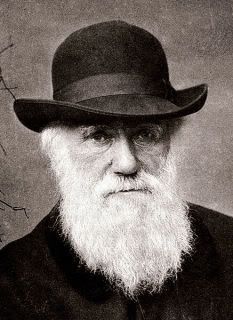
Darwin Day!

I almost forgot; today is Darwin Day!

Happy Darwin Day. Here's to a true and long-lasting appreciation of the giants on whose shoulders we stand :)

Lack of Objectivity = Lack of Morality?

This comes as a sort of footnote to my previous posting, but I wanted to keep them separate for easy reading.

There is a popular assertion amongst theistic "moral objectivists," basically that "atheists have no basis for morality." This is what I want to discuss.

In my previous post I mentioned Hitler. I mentioned the Christian argument that atheism, being a lack of faith (or evolution, being erroneously represented as a "tenet" of atheism), somehow inherently leads to immorality of the kind that allows genocide and racism. This is what most Christian moral objectivists will have you believe:

1) that Christian morality, being "objective," gives us a final judgmental standard that is above human influence (and thus cannot be changed by humans with an agenda), and so if we all play by the objective rules, then anytime someone does something wrong or tries to take power over others and deny them their objective rights, we can safely condemn them based on these rules;

2) that, because atheism does not have this "outside standard," it is thus subject to intersubjective human standards, which can be changed and manipulated to suit an agenda (and further, paradoxically, that this intersubjective standard somehow "becomes" the objective standard of morality). Therefore, based on this worldview, those who seek to "rise above" others by asserting their own beliefs violently will inherently take power, because those who are not violent are obligated to "respect the opinions" of those taking power, because they have no objective basis on which to oppose them.

To keep it simple....the fallacy of this argument is that it assumes the same dogmatic approach to subjectivity as the Christian approach assumes to objectivity.

Hitler's Nazi germany is often touted as an example of this: "if morality is subjective, then Hitler was right to abide by his own subjective opinion, and so if you don't believe in god as an objective moral standard, then you have no way of condemning him aside from your own personal opinion."

What proponents of "objective morality" (OM) fail to acknowledge is that the above statement is twofold:

1) that is an objective statement --- that "Hitler was right" to act on his beliefs. Subjectivity does not translate between individuals; in a world with no objective morality, nobody is "right or wrong" in an objective sense; there is only what people believe. And it's all equal; nobody "has more of a right" than anyone else, so if someone tries to act as if they have more rights than others, then it is only natural for others to take action and "restore the balance" by removing the offender who seeks to elevate himself above others. This is a realist statement as well, but the idea of subjective morality does not contradict a realist worldview; it simply asserts the nature of morality as realistically subjective, like perhaps the preference of a certain flavor of ice cream over another (although the importance of morality is generally venerated much more highly than the importance of ice cream preference; this is a testament to the prevalence of moral judgment as a realistic part of our daily lives. Ice cream preferences, by comparison, do not have that much of an impact on our societies and so come into play much less frequently and powerfully, and so naturally, you won't find too many people who value both judgments in the same).

2) that in a world driven by subjectivity, while it is true that there is no objective basis for condemnation, there is also no objective basis for action; Hitler "breaks the rules" when he rises to power and begins killing others based on a "higher standard" (the idea that Jews are an "inferior race"). In a subjective world, Hitler has no objective basis on which to make that statement, and thus no objective basis on which to act in the first place. Thus a response to his action is justified on that ground, the realistic ground that "we all have the same (zero) objective rights."

3) therefore, in a subjective world, there must be some standard other than "objectivity" which is used to make moral judgments.

In a way, it all "cancels out" --- since there is no "final objective law," nobody has any special rights that place them 'above' anyone else; we are all "equal" in that we have the same rights (or lack thereof). So when someone says, "In a subjective world, Hitler was right to act on his beliefs," what they're saying is, Hitler was right according to Hitler. According to you, he might be wrong. Hence, it "cancels out" in that you have just as much of a justification to respond as he does to act. If you have no objective basis on which to respond, then he has no objective basis on which to act. Yet, you both have your own subjective judgments, which you are acting on by carrying out this conflict.

In closing....I think the fundamental issue that OM and SM proponents have to work out is not that "there is no basis for morality in a secular, morally subjective worldview," but rather that there is a different basis. Just as it's easy for you to play the reductionalist and say, "If there's no objective morality, I can do whatever I want and you can't stop me," I can easily play the reductionalist right back at you and say, "If there's objective morality, I can do whatever I want and you can't stop me." That is ultimately a game of semantics; in order for any of our judgments about morality to have any value beyond said semantics, they have to accurately reflect the world around us as we experience it, and they have to accurately describe (and predict) moral actions and judgments. They can be "objective" in that sense, in that they have to be based on something, but they cannot be objective in the sense that they come from outside of our perceptions of the world. Because morality is prescriptive, it is, by definition, a statement of subjective judgment about the world --- as I have heard it said, "morality is your answer to the question, 'what should we do?'" It is subjective by nature.

As for the fear of crazy Hitler-esque worldviews becoming dominant for lack of an objective standard condemning them? A healthy dose of skepticism prevents views like that from ever rising to power; for as I explained in my previous post, such hierarchies are only possible because large amounts of people buy into them unskeptically. If every Christian/atheist/etc. in Nazi Germany had skeptically approached Hitler's doctrine of anti-Semitism, then things might have been very different, indeed. If I may be bold for a moment....I suspect this is why Christians in particular are so afraid of Hitler, and thus bring him up so often. They realize that the very system of taking "leaps of faith" and trusting in beliefs and doctrines with little or no real evidence, they fear that, if others are lead away from Christianity, the blind faith that they have been conditioned into by Christianity will lead them to want to blindly have faith in other things besides Christianity; they fear that people will choose to have blind faith (which is what Christians want), but in the "wrong" thing (which is what they fear). Ironically, it is their strongest weapon that is also their greatest weakness, and their greatest fear. Perhaps this is why they stress such a powerful, central focus on one ultimate god --- if your blind faith slips away ever so slightly from that god, it may accidentally stick to something else and become as inseparable from that as it formerly was from god. The answer to this dilemma, in my opinion? Stop stressing blind faith! There is no such risk from healthy skepticism, and skepticism applies even to itself. Always demand answers to the questions that hound you. And if there are none, don't be afraid to admit that. That is my prescription.

But I digress....ultimately, without his legions of followers unskeptically absorbing his every word, Hitler would have been no different than a demented preacher screaming on a street corner. So the important thing for me to stress is that atheism and skepticism are not necessarily the same thing. I don't think people should get a big head just because they've managed to apply skepticism to one area --- I know many atheists *coughBillMahercough* who are also conspiracy theorists and the sort, who seem to think that being an atheist automatically makes you smarter than everyone else. This is hypocrisy; what makes you more adept in the real world is to be skeptical of beliefs held without evidence, not one belief that you may hold that happens to be reasonable.

Just remember --- nobody has ever built a tyrannical regime with millions of followers based on "too much skepticism."

Hitler: Christian, Atheist, or Irrelevant?

Today I want to briefly address this accusation, which seems to pop up quite often in any kind of debate about morality and religion, that "Hitler was an atheist," as well as the subsequent response that "actually, Hitler was a Catholic." This is often labelled in internet debates as a reference to Godwin's Law:

Godwin's law (also known as Godwin's Rule of Nazi Analogies or Godwin's Law of Nazi Analogies) is a humorous observation made by Mike Godwin in 1989 which has become an Internet adage. It states: "As an online discussion grows longer, the probability of a comparison involving Nazis or Hitler approaches 1." In other words, Godwin put forth the hyperbolic observation that, given enough time, in any online discussion—regardless of topic or scope— someone inevitably criticizes some point made in the discussion by comparing it to beliefs held by Hitler and the Nazis.

Most primary sources make it pretty obvious that Hitler was a Catholic. He references "Divine Providence" and "Our Lord Jesus Christ" and Jesus' "struggle" against the "Jewish poison" all throughout his many publicly documented speeches. This is what people will tend to refer to when they say that Hitler was obviously a Catholic.

But there are also Christians out there who insist that Hitler was "secretly" an atheist. The primary source for this conspiracy theory is "Hitler's Table Talk," a series of statements consisting of comments Hitler supposedly made "off-the-record," that were recorded and published at a later date by what are said to be first-hand accounts --- comments that supposedly revealed his "anti-Christian" or at least "anti-religious" motivations.

Now for reasons of brevity, I won't go into the actual truth or falsehood of either of these claims. What I want to discuss here is the reasoning behind these claims --- the points they were invoked to defend against, and their effectiveness toward that end.

Hitler is almost unanimously mentioned as an "atheist" in circles where fundamentalist Christians want to equivocate between "science" or "evolution" or "atheism" and genocide. Ben Stein has famously compared evolution to the Nazis, saying that "science leads you to killing people." Hitler is almost always trogged out to support this accusation --- the implied sentiment is, "Hitler is what happens when you accept evolution."

So when, say, an atheist brings up Hitler's public mention of Christianity, God, Jesus, Divine Providence, and the Christian roots of anti-Semitism, or the fact that the buckle of each Nazi uniform read Gott Mit Uns (God With Us) and asks the theist, "what is the explanation for that if Hitler was an atheist?" The response will be, "Hitler was secretly an atheist, but he used Christianity in order to deceive the public so he could carry out his master 'Darwinist' plan."

This is where I want to come in and say: even if we assume that this accusation is 100% true --- that "Hitler was a secret atheist using Christianity as a front for his conspiracy to 'commit Darwinism'" is a 100% accurate reflection of reality --- it remains true that Hitler would not have been able to do even that if there did not exist a ready and willing followership of Christians ready to accept this "front."

Seriously, stop and think about that for just a few seconds: simply by accepting the idea that Hitler could successfully use Christianity as a front implies that there are a large number of Christians who would agree with such a front. The very idea that "using Christianity as a front" for the Holocaust would have any degree of success whatsoever can only be true if a large amount of Christians are willing to support it. What would have been the use of Hitler "pretending to be Christian" if Christians everywhere had unanimously spoken against the Holocaust and the Jewish genocide? The very idea that such people could be exploited hints at the notion that the ideas commonly attributed to Hitler himself (such as genocidal anti-Semitism) found ground for common acceptance within the Christian populace.

If the Nazis had all been atheists, or even just openly anti-Christian, then there would have been no need for Hitler to "feign Christianity" in order to "exploit" the atheist populace. He would just say, "Hey, we're all atheists, let's take over the world and commit genocide!" There would be no need for such a "front" as Christianity. The idea that such a front would even be necessary insists that Christianity was, in fact, the dominating mindset within Nazi Germany.

Before I make my closing point, I want to say that in casual conversation (or in internet debate), I make it a point not to bring Adolph Hitler and the Nazis up as a counterpoint to anything not already pertaining to Nazism, as to me it reeks of reductio ad absurdum. I personally do not believe that "Christianity made Hitler do it," or that "evolution/atheism made Hitler do it." I have another reason entirely why I believe the Nazi efforts were successful to the extent that they are, even if Hitler's ideology was ultimately idiosyncratic (which it clearly was not). So do not read this as an accusation of either party in that respect.

I believe that regimes like the Nazis (or the current regime in North Korea) are possible not because of "evolution," or even because of "Christianity," specifically. It is my understanding that such regimes come to power because of the effect that irrational faith has on people. Keeping in mind that there are two kinds of faith --- faith established through testing experience, such as the faith you have in a friend or certain family member; and blind faith, the kind we talk about when we say "leap of faith," the kind of faith that people assert to believe in God or in ideas that have not been demonstrated or tested --- I am talking about the latter of the two, blind faith.

For if you take the position that is implied by the Christian defense against Hitler --- that the German masses were really good-hearted, but ultimately unwitting, victims to Hitler's propaganda machine, and were simply being used by Hitler under the guise of "Christianity" --- then it follows that *something* made them believe in Hitler and his cause, in spite of its asserted "deviance" from accepted Christian norms. Today's Christians assert that there is simply NO WAY WHATSOEVER to justify anti-Semitic genocide using the Bible or Christian beliefs, so it cannot be a reason derived from the beliefs themselves (otherwise the entire point of this defense would be useless; even if Hitler WAS using Christians, it wouldn't matter because their beliefs would've overlapped with his anyway, rendering this justification self-defeating). So from a Christian perspective, it couldn't be a rational position; a critical angle would have lead them to oppose Hitler.

So accepting the offered Christian defense against Hitler, and removing the possibility for a skeptical approach to Hitler's ideas on behalf of the Christians serving under him, the only possibility that remains (and that can account for such widespread, zealous and unquestioning support in spite of supposedly "differing" religious ideas) is blind faith. Hero worship. Savior mentality. Hitler was the "saving grace" of the German state and economy; therefore his ideas were perfect and not to be questioned.

Sound familiar?

Let me say in closing that it is not my intent here to argue from scratch that "the Nazis were motivated by Christianity," or to say that "Christianity inherently leads to Nazism and genocide;" I'm not quite as shameless as some of my Christian contemporaries that I would make such a bold and crass blanket statement. However, if we follow the line of reasoning, used by Christians who invoke this argument against atheists, to its logical extreme, then we will see that indeed, the Nazi regime could not have happened without Christianity.

Once again, I'll say it: This is not my argument, this is my response to the arguments made by Christians that evolution or atheism necessarily leads to Hitlerian/Nazi ideology.